

Winter Foods: Vegan Seasonal Guide
Winter is the season that offers heartier foods like root vegetables such as sweet potatoes. It also is the time for denser greens like collards. Citrus fruits often grown in warmer regions ripen in the winter months.
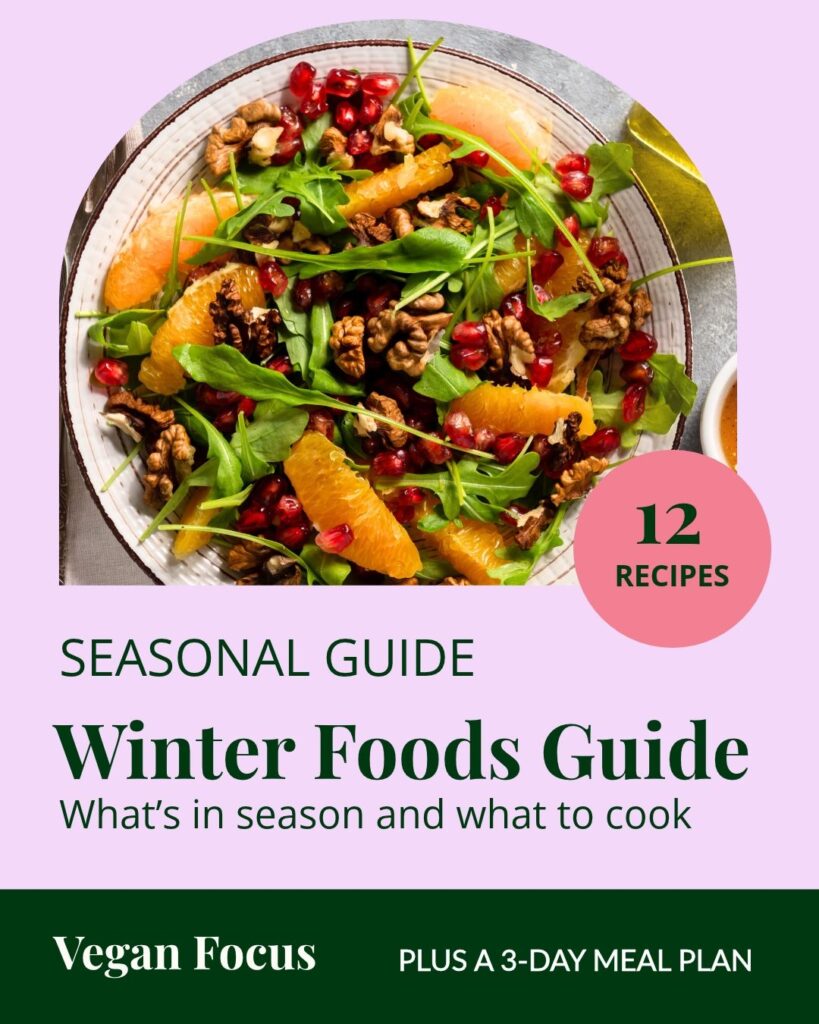
Table of Contents
What Food is in Season through Winter?
Peak times may vary with region.
|
Winter Foods |
Ways to Use It |
Peak SEASON |
|---|---|---|
|
Bake into crisps, simmer into applesauce, slice into salads, top oatmeal |
Dec–Feb (stored Fall harvest) |
|
|
Toss with citrus and walnuts, blend into pesto, top flatbreads |
Dec–Feb (mild-climate harvest) |
|
|
Spread on toast, blend into dressings, add to bowls, make guacamole |
Year-round supply; Dec–Jan Florida late crop |
|
|
Blend into smoothies, bake into bread, slice over oats, freeze for nice cream |
Year-round (mostly imported; no Winter peak) |
|
|
Roast for salads, blend into soup or hummus, pickle, shred into slaw |
Dec–Feb (regional harvest or stored) |
|
|
Belgian Endive |
Fill leaves with chickpea salad, toss with pears, braise or roast |
Year-round (indoor-grown) |
|
Bok Choy |
Stir-fry with ginger, add to noodle soup, steam, roast |
Dec–Feb (mild-climate harvest) |
|
Roast with garlic, steam, add to stir-fries, blend into soup |
Dec–Feb (mild-climate harvest) |
|
|
Brussels Sprouts |
Roast with balsamic, shred into slaw, sauté with apples |
Dec–Feb (mild-climate harvest) |
|
Make slaw, braise with apples, add to soup, stuff with lentils and rice |
Dec–Feb (regional harvest or stored) |
|
|
Roast, blend into soup, shred into salads, bake into muffins |
Dec–Feb (regional harvest or stored) |
|
|
Roast florets, mash, blend into creamy sauces, add to curry |
Dec–Feb (mild-climate harvest) |
|
|
Celeriac (Celery Root) |
Mash with potatoes, roast cubes, blend into soup, shred into slaw |
Dec–Feb (regional harvest or stored) |
|
Add to soups and stuffing, chop into chickpea salad, braise, serve with hummus |
Dec–Feb (mild-climate harvest) |
|
|
Chestnuts |
Roast and peel, chop into stuffing, blend into soup, add to mushroom dishes |
Dec (late-season sales; mostly Fall harvest) |
|
Clementines |
Peel for snacks, add segments to salads, use juice in dressings, zest into baking |
Dec–Feb (variety and origin vary) |
|
Collard Greens |
Braise with beans, sauté with garlic, add to soups, fill blanched leaves as wraps |
Dec–Feb (mild-climate harvest) |
|
Fennel |
Roast wedges, shave into citrus salads, add to soups, use fronds as garnish |
Dec–Feb (mild-climate harvest) |
|
Garlic |
Roast whole bulbs, flavor soups, blend into dressings, make garlic bread |
Dec–Feb (stored harvest) |
|
Grapefruit |
Add segments to salads, broil halves, use juice in dressings |
Dec–Feb (U.S. citrus season) |
|
Guava |
Blend into smoothies, simmer into jam, add to fruit salad, make compote |
Feb (Florida secondary crop begins; also year-round) |
|
Herbs (Parsley, Rosemary, Thyme, Sage) |
Flavor soups and stews, season roasted vegetables, blend into sauces, garnish |
Varies by herb; mild-climate or indoor supply |
|
Jerusalem Artichokes (Sunchokes) |
Roast, sauté, blend into soup, shave thinly into salads |
Dec–Feb (regional harvest or stored) |
|
Massage into salads, add to soups, bake into chips, blend into pesto |
Dec–Feb (regional harvest) |
|
|
Kiwifruit |
Slice into fruit salads, top oats or vegan yogurt, blend into smoothies |
Dec–Feb (stored U.S. Fall harvest) |
|
Kohlrabi |
Shred into slaw, roast wedges, add to soups, serve raw with dip |
Dec–Feb (mild-climate harvest or stored) |
|
Kumquats |
Slice into salads, simmer into marmalade, make chutney, eat whole without seeds |
Jan–Feb (season continues into spring) |
|
Make potato-leek soup, braise, add to savory pies, sauté for pasta |
Dec–Feb (regional harvest) |
|
|
Brighten soups, make dressings, bake into desserts, flavor tahini sauce |
Dec–Feb (Winter varieties; also year-round) |
|
|
Build Winter salads, layer into sandwiches, use leaves as wraps |
Dec–Feb (mild-climate harvest) |
|
|
Brighten bean dishes, make dressings, finish tacos, flavor drinks |
Year-round supply (mostly imported; no U.S. Winter peak) |
|
|
Mushrooms (Cultivated) |
Sauté for toast, add to risotto, make gravy, roast for grain bowls |
Year-round (cultivated; no distinct Winter peak) |
|
Mustard Greens |
Sauté with garlic, braise with beans, add to soups, mix young leaves into salads |
Dec–Feb (mild-climate harvest) |
|
Caramelize, roast, add to soups and stews, pickle for toppings |
Dec–Feb (mainly stored harvest) |
|
|
Add to salads, use zest in baking, make sauces, enjoy fresh segments |
Dec–Feb (navel oranges; varieties vary) |
|
|
Roast, mash with potatoes, blend into soup, add to vegetable stews |
Dec–Feb (regional harvest or stored) |
|
|
Poach, bake into crisps, slice into salads, top toast or oats |
Dec–Feb (mainly stored Fall harvest) |
|
|
Grill slices, make salsa, add to stir-fries, blend into smoothies |
Year-round availability; no distinct Winter peak |
|
|
Roast, mash, bake, add to soup, make warm potato salad |
Dec–Feb (mainly stored harvest) |
|
|
Blend into soup, stir purée into oats, make curry, bake into muffins |
Dec (stored Fall crop); canned purée year-round |
|
|
Radicchio |
Roast with balsamic, grill wedges, shred into salads, add to risotto |
Dec–Feb (mild-climate harvest) |
|
Slice into salads, pickle, roast, serve with hummus |
Dec–Feb (mild-climate harvest) |
|
|
Rutabagas |
Mash, roast, blend into soup, add to hearty stews |
Dec–Feb (regional harvest or stored) |
|
Toss into salads, wilt into pasta, add to soup, fill vegan lasagna |
Dec–Feb (mild-climate or protected harvest) |
|
|
Bake and stuff, roast, mash, add to curry, blend into soup |
Dec–Feb (stored Fall harvest; often labeled “yams”) |
|
|
Sauté leaves and stems, add to bean soup, stir into pasta or grain bowls |
Dec–Feb (mild-climate harvest) |
|
|
Tangerines |
Enjoy fresh, toss into salads, use zest in baking, juice for dressings |
Dec–Feb (variety-dependent citrus season) |
|
Turnips |
Roast, mash, add to soups and stews; sauté the greens |
Dec–Feb (regional harvest or stored) |
|
Winter Squash (Acorn, Butternut, Spaghetti) |
Roast, stuff with grains, blend into soup, serve spaghetti squash with sauce |
Dec–Feb (stored Fall harvest; variety-dependent) |
|
Yams (True Yams) |
Peel and cook thoroughly; boil, mash, roast, or add to stews |
Imported tropical crop; availability varies |
Show 45 more Winter foods
Additional produce rows appear in the table above when this control is expanded.
This is the perfect time to enjoy warming soups, hearty meals, and the bright citrus flavors .
COOK IT
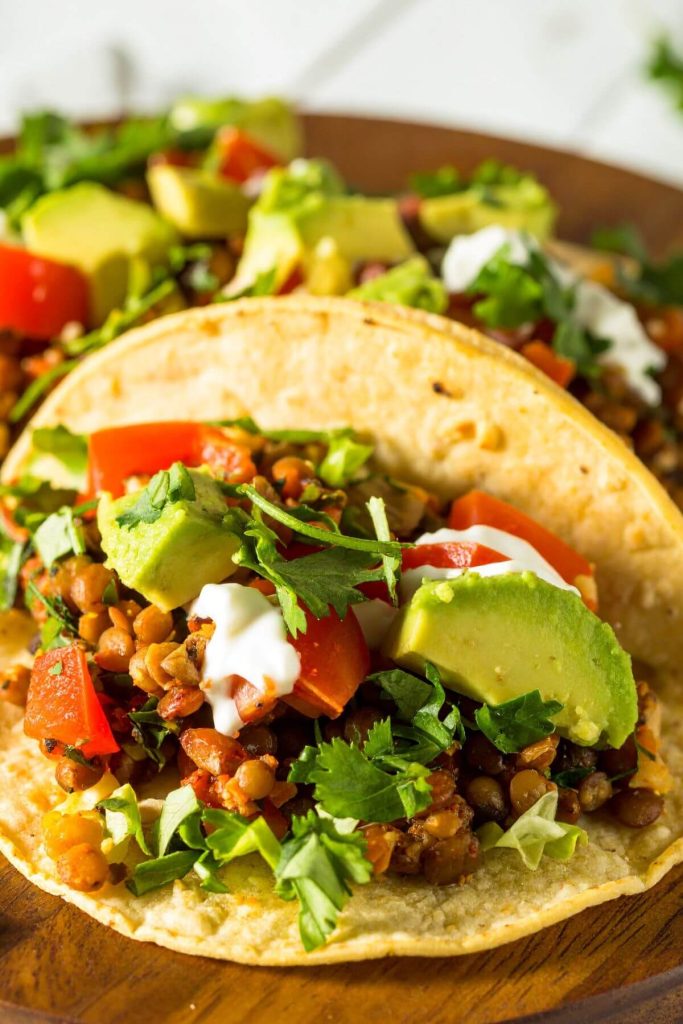
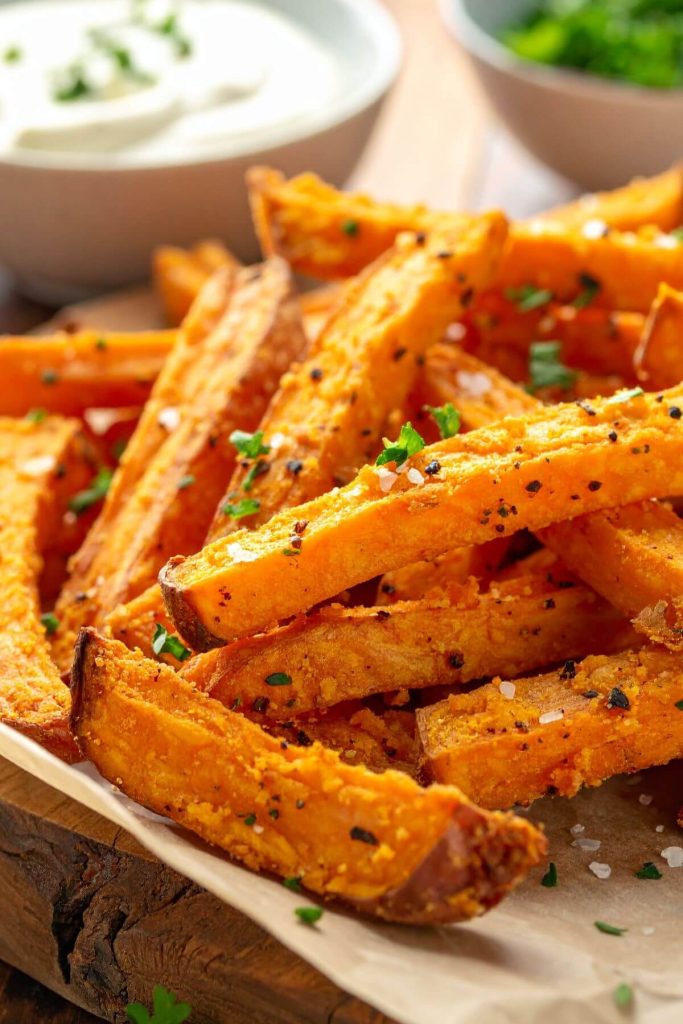
12 Simple Winter Recipes



3-Day Winter Meal Plan
Day 1

BREAKFAST
LUNCH
DINNER
Day 2

BREAKFAST
LUNCH
DINNER
Day 3
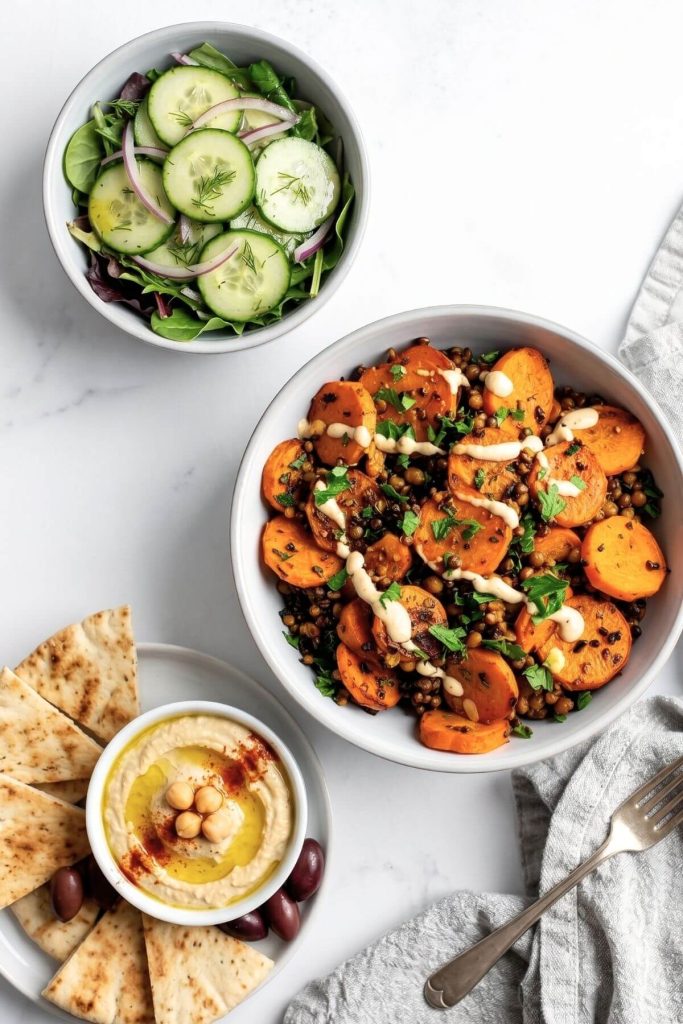
Bonus
For bigger appetites:
Pro Tips for Busy Home Cooks
1. Build meals around Winter favorites
- Start with one or two ingredients, such as cabbage, leeks, carrots, cauliflower, or winter squash.
- Pair roasted vegetables with beans, lentils, or tofu for hearty bowls and easy dinners.
- Mix up your menu with crisp cabbage slaws, citrus salads, and sautéed greens alongside warming soups.
2. Prep once for easier meals
- Chop onions, carrots, and celery together for a ready-to-cook soup base.
- Wash and slice leeks carefully, rinsing between the layers to remove trapped dirt.
- Roast extra root vegetables to use in wraps, grain bowls, or blended soups.
- Make a double batch of soup, stew, or chili and freeze individual portions for busy days.
- Keep canned beans, frozen greens, and vegetable broth on hand for quick meals.
3. Brighten hearty dishes with citrus
- Finish bean soups, lentil stews, and sautéed greens with a squeeze of lemon.
- Toss orange or clementine segments into salads with kale, cabbage, or roasted beets.
- Add lemon or orange zest to dressings, muffins, and oatmeal.
- Balance creamy soups with fresh herbs, cracked pepper, or a little citrus juice just before serving.
4. Make Winter cooking work for you
- Cut dense vegetables into small, evenly sized pieces to help them cook more quickly.
- Give vegetables space on the roasting pan so they brown instead of steaming.
- Blend white beans into soups for a creamy texture without dairy.
- Slice broccoli stalks into stir-fries and chop chard stems into soups to use more of each vegetable.
- Turn leftover roasted vegetables into a new meal with warm grains and a different sauce.
Winter meals don’t need to be complicated to feel comforting. A bubbling pot of soup, golden roasted vegetables, and a bright citrus dressing can bring plenty of variety to the table with just a little planning.




Get the free recipe cookbook
Fresh recipes and weekly meal plans, delivered to your inbox